
Context
Hydration Made Smart is an e-commerce brand I built end-to-end as an applied capstone project, working as the digital marketing specialist responsible for the full go-to-market strategy from market research through to a live, sellable website. Rather than a design exercise or a mockup, the brief was to take a single product (a self-cleaning, UV-C smart water bottle) and build the complete commercial front end around it: figure out who would actually buy it, prove that demand was real, and translate that research into a WooCommerce store capable of taking orders.
The product itself was a given a rechargeable water bottle that self-purifies using UV-C light, eliminating 99.9% of bacteria without filters or manual scrubbing. My job was everything downstream of that: audience, positioning, brand identity, site architecture, copywriting, and the technical build.
This is a self-directed practice project built to apply real market research and website-strategy methodology to a fictional brand not a live client engagement or a commercial business.
Details
Time Frame:
Three Weeks
Role:
Digital Marketing Specialist
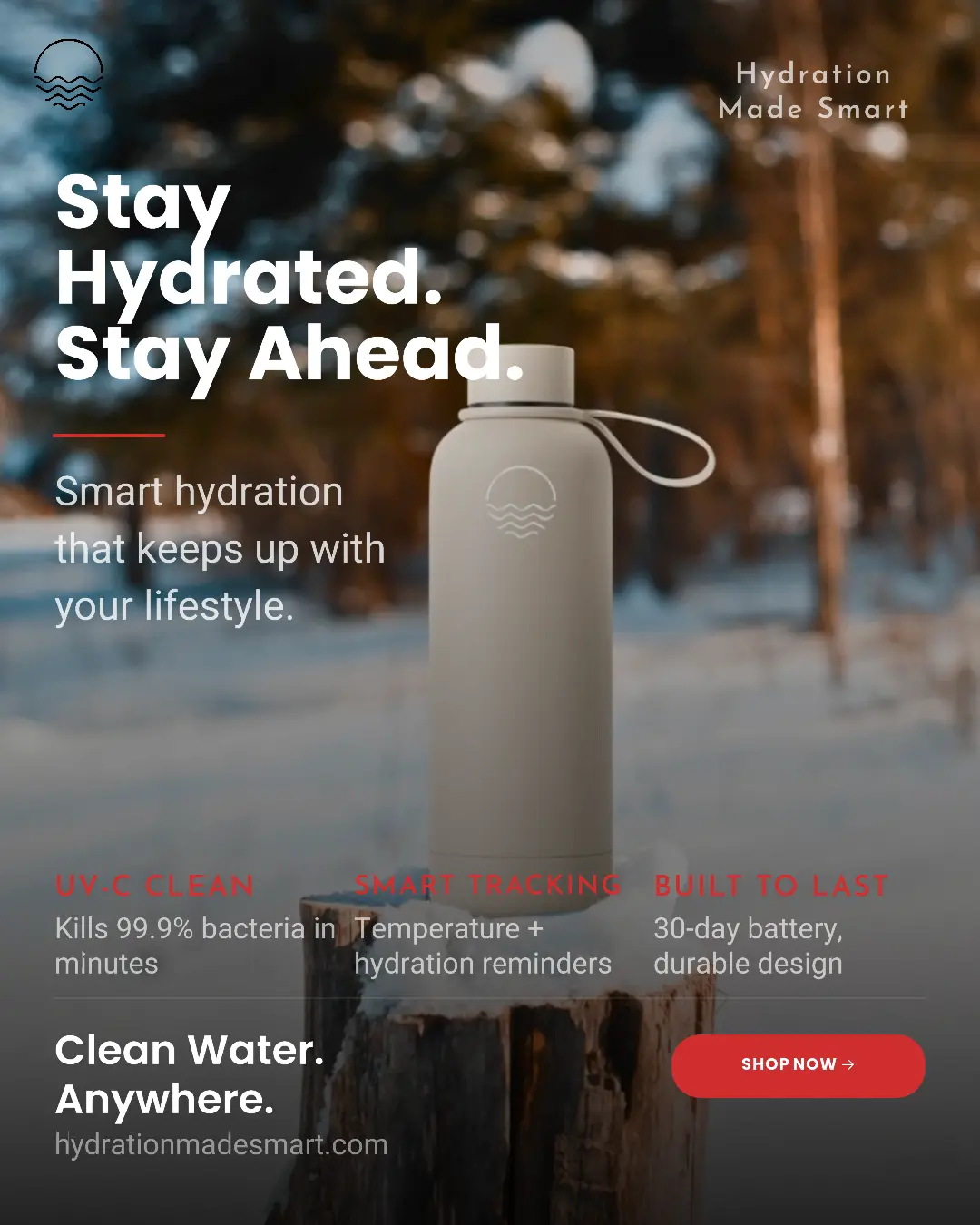
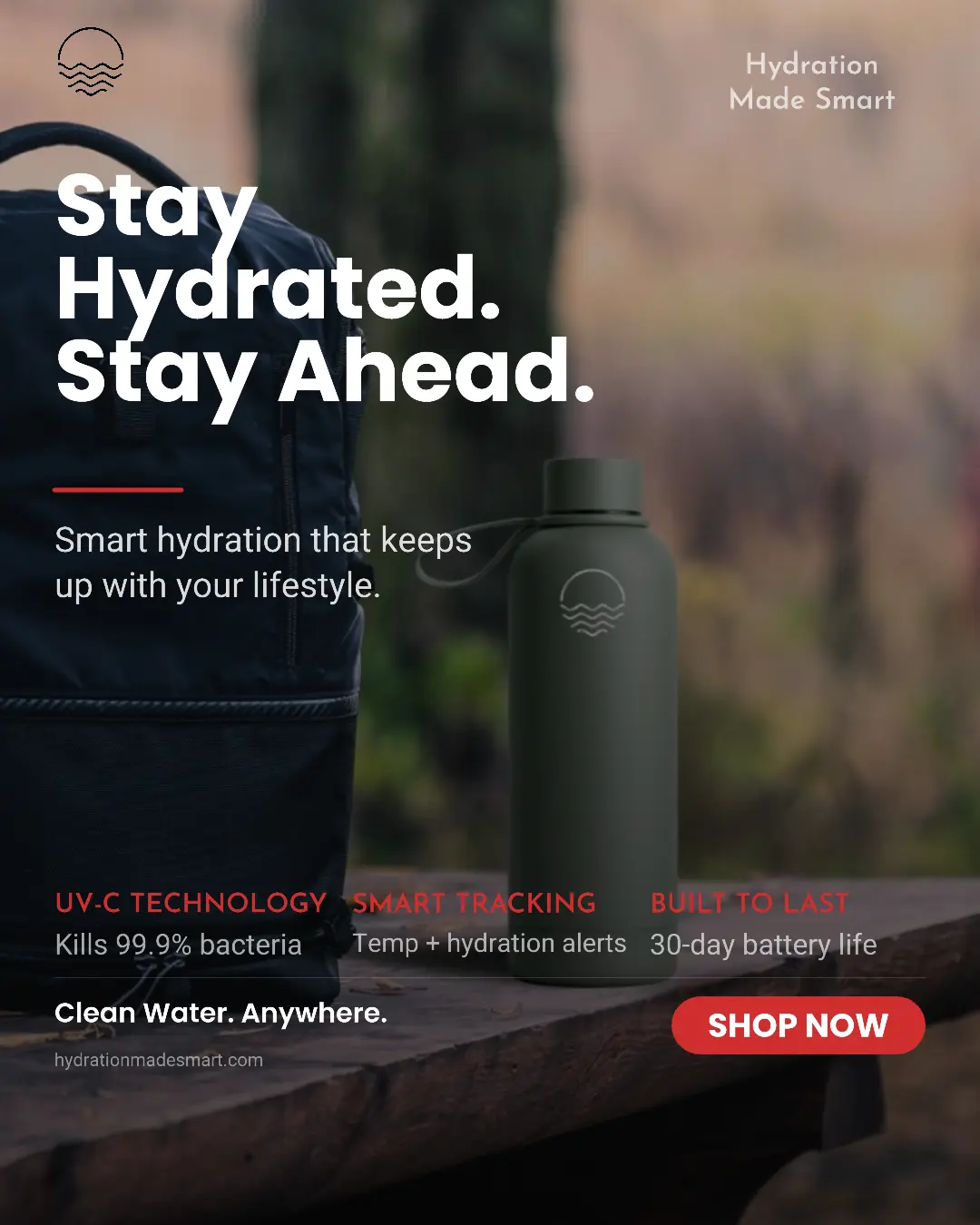
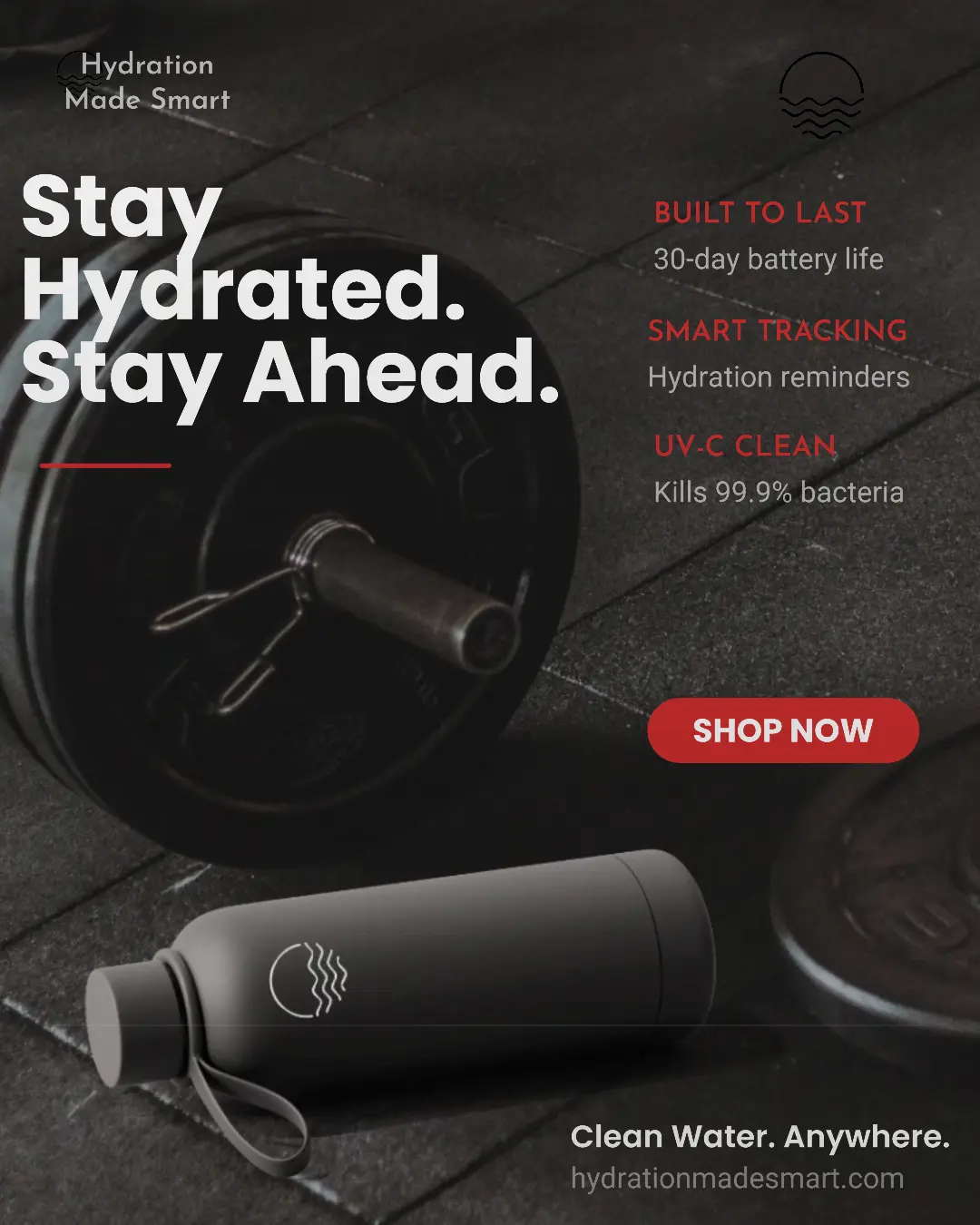
Some of The Best Ad Creatives

Overview
Hydration Made Smart sells a self-cleaning smart water bottle a rechargeable bottle with built-in UV-C purification that kills 99.9% of bacteria at the press of a button in three colorways (Slate Green, Graphite Black, Canyon Sand) at $59.99. The challenge wasn’t the product; UV-C self-cleaning bottles are a real, if narrow, category. The challenge was that “clean water bottle” on its own says nothing to anybody. It had to become someone’s answer to a specific problem before it could become anyone’s purchase.
I started with market research to find out who that “someone” actually was, using Google Autosuggest to surface real search behavior and Google Trends to confirm the interest was steady rather than seasonal. That research pointed to three audience segments gym-goers, travelers, and hikers, each with a distinct reason to care about self-cleaning hydration. From there, I built a full brand around the product: name, visual identity, a cause-marketing mission (a fictional-but-strategic commitment to donate all profits to UNICEF’s Clean Water Program), and a WooCommerce site structured to walk a stranger from “never heard of this” to “added to cart” in one scroll.
The result is a live, fully functional ecommerce store responsive across desktop, tablet, and mobile with audience-specific messaging built into the homepage itself, a complete three-product catalog, and a tested checkout flow with shipping and tax logic already configured.
Challenge
Going into this project, I had a product with no existing brand, no customer base, and no data to lean on just a spec sheet for a self-cleaning water bottle. That created three problems to solve before writing a single line of website copy.
The audience wasn’t obvious. Technically, anyone who drinks water is a fit, which means “everyone” isn’t really an audience at all. I needed to find the specific groups of people actually searching for a product like this.
The demand had to be real, not assumed. It’s easy to guess at audience segments like gym-goers or hikers. It’s harder to prove those segments have steady, year-round interest rather than a passing trend, and I needed that proof before building a site around them.
The site had to do the selling on its own. With no existing brand reputation or traffic, every visitor would be a cold visitor. The homepage alone had to build trust, explain the product, and make the case to buy all within the first scroll or two.
Underneath all three: a single product in three colorways had to feel like a complete, credible brand built solo, in one month.

Solution
I worked in the order the problems needed solving: find the audience, prove it, speak to it, then build a site around that message.
Finding and validating the audience. Using Google Autosuggest (“best water bottle for…”) in an incognito browser set to the target region, I found real search patterns rather than guessing at segments. That surfaced gym goers, travelers, and hikers. I checked each against Google Trends, comparing to the benchmark keyword “smart water bottle,” to confirm steady year-round interest before committing the site’s structure to them.
Turning research into messaging. For each segment, I mapped their situation, their specific frustration, and the product feature that solves it. Gym-goers needed safe tap water without spills; travelers needed clean water without relying on plastic bottles; hikers needed something rugged with no filtered water in sight. Each pair became a short key message, now anchoring its own homepage section.
Structuring the site to sell cold traffic. The homepage follows a strict order: hero (who it’s for, what it does, why it matters), then credibility (testimonials), then the three audience sections with their own key messages, then the product grid, then a full-screen mission close. Navigation is trimmed to Shop, About, and Explore no Home button, no clutter.
Making it buyable. Three fully detailed products, a tested checkout with region-based shipping and automatic tax, and a layout adapted separately for desktop, tablet, and mobile.
Results
- Turned a single product with no prior brand equity into a complete, credible ecommerce identity
- Audience-specific messaging gives each segment a reason to see themselves in the brand, not just the features
- The mission layer moves the brand beyond function, giving customers something to feel aligned with
- A fully responsive, tested storefront desktop, tablet, mobile with working checkout, shipping, and tax logic
- Segment-based site structure is built to be tracked, so future traffic data can show what resonates and guide what evolves next